
دليل مشروع شاشة LED
Airport LED Display Service Access: Design Checklist
Airport LED display service access should be designed before a terminal wall or poster location is approved. Record how technicians can reach the equipment, which direction components are removed, what space must remain clear and when the work can occur. Confirm those conditions with the terminal operator, building team and installer before asking a manufacturer to finalize cabinet or system layout.
A screen can be visually suitable but difficult to maintain after architectural finishes, retail fittings or security boundaries are installed. The access brief is therefore part of procurement, not a detail to solve after a price is accepted. This checklist is for project teams comparing a physical LED display proposal. It does not promise a maintenance interval, a guaranteed uptime or approval under a particular airport rule.
What does an airport LED display service access plan need?
An airport LED display service access plan should identify the installed screen zone, removal direction, reachable components, working route, temporary work area and the person who authorizes maintenance. Start with dimensioned plans and elevations, then mark the display depth, adjacent finishes, doors, columns and any space reserved for technicians or equipment. Ask the display supplier to state the proposed front- or rear-service method and the physical items that may need replacement. The installer and terminal team must verify that the proposed route remains usable in operation, including during controlled access periods. Record power-isolation and content-switching responsibilities, but do not assume the screen manufacturer owns the airport’s electrical or IT systems. Treat any access clearance as a project-specific engineering value, not a universal dimension. A serviceable display is one whose actual approved configuration can be reached without relying on an undocumented future workaround.
The MVP LED station and airport solution identifies multiple terminal locations where display type and access will differ. This article focuses on the physical maintenance interface. It does not describe the content strategy or price comparison covered by neighboring articles in the series.
Which components and routes must be reachable?
Ask the proposed supplier what can be removed from the front, what requires rear access and what must be disconnected first. The answer should correspond to the actual cabinet and mounting concept in the quotation. A generic statement that the product is “serviceable” is not enough for an airport LED screen access plan. The designer needs to know the direction of removal and whether there is a practical place to hold a component during replacement.
Trace the technician’s path from the authorized entry point to the installed display. A wall above a retail counter, a unit in a public concourse and a screen inside a controlled service area can impose different constraints. The operator should identify access permissions and operational windows. The contractor should check the physical route, equipment handling and temporary protection. The manufacturer can provide a proposed system method but cannot grant building access.
Access items to mark on the drawing
- Screen position, active area, cabinet boundary and mounting depth.
- Front or rear removal direction for the proposed components.
- Permanent doors, panels, structure, furniture and other obstructions.
- Technician route and work area while a component is removed.
- Power and signal isolation points assigned to the responsible teams.
- Temporary barriers, permits or controlled operating windows specified by the venue.
Use the supplier’s actual dimensions and site measurements when these become available. Do not copy clearances from an unrelated project. If the architecture changes, repeat the access review against the revised drawing instead of assuming the original route still exists.
How should terminal LED wall maintenance influence the layout?
Service direction can affect cabinet layout, depth and surrounding finishes. Where the terminal cannot provide a rear corridor, the project team may ask whether a front-service configuration is appropriate. Where rear access is planned, the access route must remain open after the wall is completed. Neither option is automatically better; compare the approved system design, operator constraints and total building scope.
The indoor LED display portfolio is a starting point for discussing fixed terminal walls, not a guarantee that every configuration has the same service method. A poster-format display may present a different access pattern because the unit and its location differ. Ask for an equipment schedule by zone instead of using a single generic detail for an entire terminal.
Consider what happens during installation and later maintenance. The initial assembly route may be available before counters and ceilings are completed, while the permanent route may be much tighter. A service plan should represent the finished building, with actual fixtures and operating boundaries. If a removable finish panel is proposed, identify who supplies it, who may open it and how it is reinstated.
Who owns the work window and handover?
The terminal operator controls when and how work may affect a public area. A manufacturer cannot promise that maintenance can occur during operating hours without that operator’s procedure. Ask the venue about access permissions, isolation, crowd management and any required escorts before including a repair method in the commercial scope. The installer should identify temporary protection and reinstatement; the IT or AV integrator should own its control and signal tasks as contracted.
For station LED display servicing, the same handover discipline applies: request a drawing showing the actual service route, installed equipment identification, system and control boundary, isolation responsibility and contact path for support. The responsible team should verify that spare or replacement components can be brought to the location and that the necessary tools can be used. If a change to architecture obstructs access after acceptance, the owner should update the record before treating the display as maintainable.
| Handover item | Evidence | Responsible review |
|---|---|---|
| As-built position | Final drawing and equipment schedule | Installer and owner |
| Service direction | Proposed component removal method | Display supplier and installer |
| Physical route | Finished-area access walk-through | Terminal and building teams |
| Isolation | Power, signal and content ownership | Electrical and systems teams |
| Work window | Operator-approved maintenance procedure | Terminal operator |
The list separates evidence from responsibility. It does not assert that MVP LED delivers each item. Scope and handover duties must be written into the relevant project contracts.
What should an airport display supplier quote include?
Provide elevations, mounting depth, proposed service side, accessible route, operating restrictions, power and signal locations, destination and required system format. Ask the supplier to answer with a product configuration, removal method, control hardware, accessories, packing, quoted spares if any, exclusions and unresolved site questions. Two prices are not comparable if one assumes an open rear corridor and another assumes front access behind finished panels.
Shenzhen MVPLED Technology Co., Ltd. develops and manufactures LED display systems in Shenzhen, China. Its approved process includes SMT, module production and aging, cabinet assembly, system configuration, inspection, warehousing and packing. That is evidence for its manufacturing role, not a claim that it controls terminal access, local installation or airline operations. Site-specific service feasibility should be confirmed with the responsible airport and contractor teams.
MOQ, lead time, spares and configuration depend on the specific product and project. A standard two-year warranty baseline is published, with exact coverage determined by the signed quotation and contract. Warranty language should be read alongside the actual service route. A promised support term cannot compensate for a component that cannot be reached safely in the finished building.
What commonly causes access plans to fail?
One risk is a drawing that shows only the front image of the display. It may omit mounting depth, cable routes, surrounding finishes and the direction a technician must move a part. A second risk is assuming that an installation route will remain available after the terminal opens. A third is leaving service ownership between the display supplier, installer and local operator unstated. Each is preventable through a coordinated drawing and a written scope matrix.
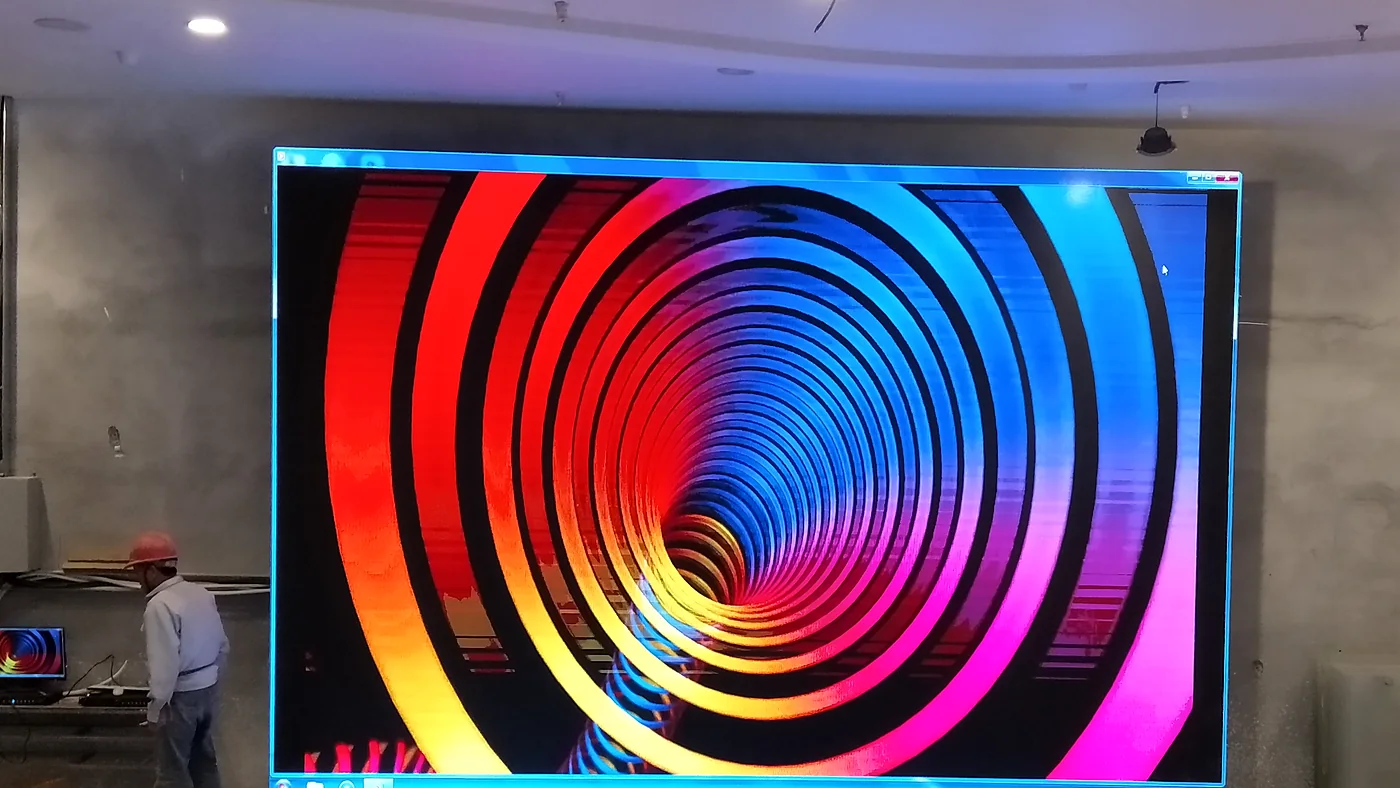
Another risk is treating a product illustration as evidence of an approved terminal service method. The image in this article is an approved indoor-installation product reference, not a photograph of an MVP LED airport contract. Use it to discuss physical display access, then test the proposed configuration against the actual site. No image can establish local permissions, fit or maintained availability.
Do not invent a universal clearance, repair time or reliability rate. Those would depend on the selected hardware, mounting, technician route, available spares and terminal procedure. If a route is uncertain, record it as a condition to resolve before order rather than burying it in a “turnkey” label.
الأسئلة المتداولة
Does front service remove the need for a service plan?
No. Technicians still need physical reach, safe access, an approved work window and a practical route for removing and carrying components.
Who approves work in a public terminal area?
The relevant terminal operator and local project teams define permissions and operating procedures. A display supplier should state its hardware method, not claim authority over the venue.
Can a rear-service wall be quoted without a rear route?
It can be discussed as a provisional alternative, but the missing route must be clearly flagged. Do not treat the layout as service-ready until the responsible team verifies access.
Is there one standard access clearance for every LED wall?
No. Required space depends on the proposed product, mounting arrangement and service method, and must be checked against project drawings and supplier documentation.
Request an access review before quotation
For airport LED display service access, send MVP LED the terminal elevations, display zone and finished-area access constraints. Ask for a proposal that describes the physical service direction and lists decisions still needed from your operator, installer and systems team.
مراجعة المقال والمصادر
المؤلف: MVP LED Editorial Team, LED Display Product and Application Content. تمت المراجعة بواسطة: TOM, Product Manager. تاريخ المراجعة: November 16, 2026.
Sources: MVP LED transport-hub application guidance; factory role; warranty terms. Access suggestions are project-planning guidance, not an airport compliance or completed-project claim.