دليل عرض LED المرن
Curved LED Wall for a Bar: Flexible or Fixed Modules?
A curved LED wall for a bar is a format decision, not a reason to specify flexible modules automatically. A flat fixed indoor display can work when the feature wall is planar; a curved module or engineered custom format becomes relevant when the approved interior geometry truly bends. Compare the desired shape, closest guest views, supporting structure, service access, and content canvas before requesting a priced system.
Bars often use a visual wall behind a counter, along an approach, or beside a DJ position. The design rendering may show a fluid curve, but the built wall may instead consist of straight facets or a flat recess. Those are different screen surfaces. Buying hardware before resolving the geometry can turn an attractive concept into an awkward seam, an inaccessible rear space, or a content layout that does not follow the finished room.
When should a bar choose flexible modules rather than a fixed wall?
Choose the display format after the bar designer confirms the actual wall geometry. A fixed indoor LED wall suits a permanent, planar surface. Flexible LED modules or an engineered curved format may suit a continuous bend, wrapped column, or shaped feature when the support, minimum practical curvature for the proposed system, service route, and content canvas are reviewed together. A faceted wall made from straight planes is not the same as a smooth curve; ask the supplier to show the proposed module layout and visible transitions. MVP LED’s entertainment solution identifies fixed indoor displays for permanent walls and flexible or creative formats for curves and corners. The supplier should price the chosen hardware and control scope against measured elevations, not a stylized rendering. Keep installation, structure, decorative finish, and content responsibilities explicit so alternative quotations describe the same buildable bar feature.
The MVP LED KTV, bar and club solution presents several venue surfaces. This comparison is limited to one curved or apparently curved bar feature and the hardware decision it creates.
What is the actual shape of the proposed wall?
Obtain a plan, elevation, section and site photographs. Mark the start and end of the display, any change in direction, the finish depth, nearest guest route and any counter or shelving that blocks access. A concept image may exaggerate curvature to express mood. A measured drawing should identify whether the LED surface is a single arc, several straight faces, an inside corner, or a flat feature surrounded by curved finishes.
Ask the interior designer to show the intended face of the image, not only the supporting wall. The distinction matters if a decorative layer sits in front of or beside the display. The supplier needs to know where the active surface ends and which edge is visible to guests. A flexible LED display can be reviewed for suitable curved forms, but no generic product photograph proves that a particular radius, module arrangement or support is right for this bar.
Three surfaces that can look similar in a rendering
- A genuinely curved active LED surface follows a continuous bend.
- A faceted active surface changes direction at one or more straight joins.
- A flat LED wall can be framed by curved architecture without bending the display.
These alternatives can produce different visual transitions and require different hardware schedules. Ask for a side-by-side sketch before selecting a format on visual language alone.
How does a fixed indoor display compare?
A fixed indoor LED display is the natural comparison for a planar, permanent wall. It allows the buyer to discuss a known active rectangle, mounting interface, control input and access route. If the bar’s curve belongs only to the surrounding joinery, a straight screen may still serve the intended content. The design team should review sight lines from stools, tables and circulation paths to see whether a flat surface appears integrated from normal guest positions.
A fixed format is not automatically cheaper or better for every project. Cost follows the actual configuration, quantity, accessories, packing and destination. A bar with difficult access or complex finishes can still require significant local work around a straightforward display. Request a quotation that separates LED equipment from the contractor’s support and joinery.
When is a curved LED format justified?
A genuine curved media surface may be useful when the active image must wrap a column, follow a continuous wall, or connect adjacent display zones without a flat interruption. The designer should explain what the curve achieves for guests and content. Then ask the LED supplier to review a specific geometry, cabinet or module arrangement, support concept, cable route, ventilation and service approach. The project should not rely on the word “flexible” without a drawing.
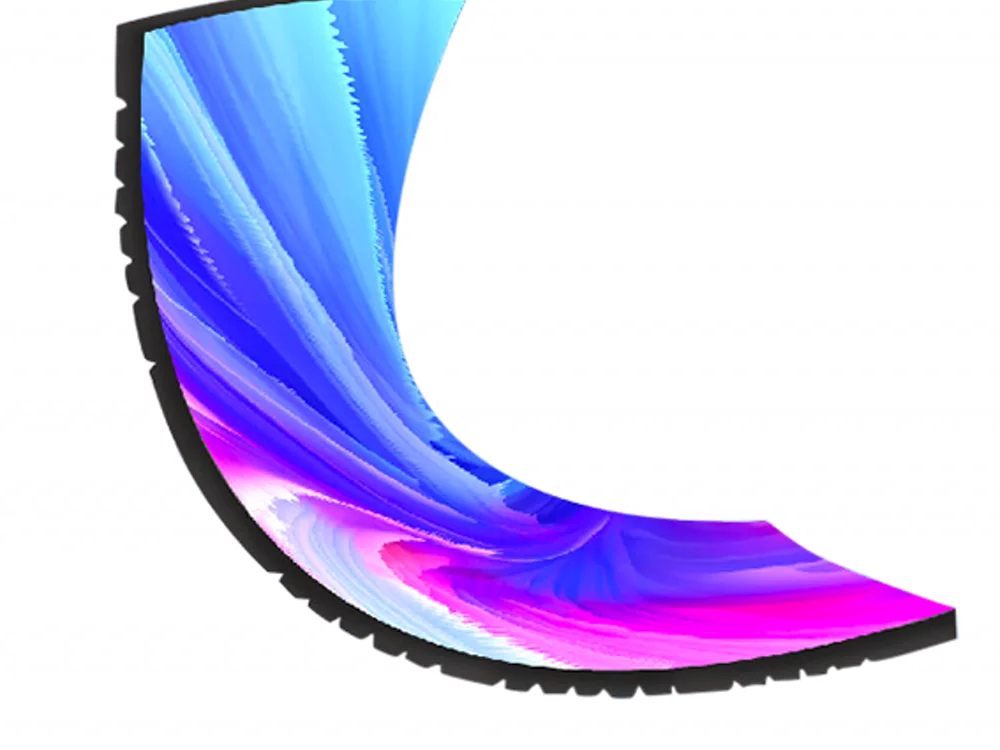
The image used here is a product-format illustration of a curved LED unit, not evidence of a completed bar installation. Treat it as a visual explanation of curvature. The actual bar proposal must be based on measured dimensions and the approved system. If the surface changes after the creative team has built media, the content canvas may also need revision.
What to ask the supplier about the bend
Request the proposed segmentation, visible seam positions, edge finish, support method and replacement route. Ask which data the content producer will receive for mapping. If the supplier offers a custom geometry, require the scope and assumptions to be written down. Do not infer a universal radius, load rating, brightness or durability from an illustrative image.
What does bar LED maintenance access change?
Bar LED maintenance access can be constrained by counters, shelves, decorative panels, lighting and late additions to the interior. Before choosing either format, decide how a module would be reached and replaced, where cables can be inspected, and whether the venue can isolate the display without dismantling finished joinery. The manufacturer can describe the proposed system’s service method; the interior contractor must show the physical clearance it will provide.
A smooth visual surface is of little value if the only service route is blocked after fit-out. Ask the two teams to mark removable panels and access paths on the same elevation. If the display is high or above a busy zone, record how safe access will be arranged by the venue team. Avoid assuming that the LED supplier owns a local safety plan or building alteration unless the contract includes it.
How should a buyer compare two curved bar LED screen proposals?
| Comparison point | Fixed or faceted option | Curved option |
|---|---|---|
| Active surface | Planar or straight segments | Continuous approved bend or custom segments |
| Drawing evidence | Face dimensions and join positions | Geometry, support and edge transitions |
| Content map | One or more straight canvases | Map aligned to the confirmed curve |
| Service route | Access for each planar section | Access around the bend and finishes |
| Quotation boundary | LED, control and local works identified | Custom scope and exclusions identified |
Use the table to expose differences, not to declare a universal winner. Require both options to respond to the same bar plan, target active area, viewing positions and content purpose. A quote that prices only display modules is not directly comparable to one that includes control hardware or installation. Ask each supplier to list inclusions, exclusions and buyer-supplied structure.
Shenzhen MVPLED Technology Co., Ltd. develops and manufactures LED display systems in Shenzhen, China. Its approved process evidence includes SMT, module production and aging, cabinet assembly, system configuration, inspection, warehousing and packing. The final product configuration, spare parts, MOQ and lead time vary by project requirements. The standard warranty baseline is two years; final coverage is established in the signed quotation and contract.
How should content follow the screen?
A curved or multi-plane display needs content planned for its actual active surface. Agree on the pixel canvas, transitions, cropping and main guest viewing area. Test a representative moving scene, not only a static logo, so the designer can see how a line or object crosses joins. A flat screen may still need careful cropping if the architecture hides an edge or guests see it from a sharp angle.
Content ownership should be explicit. The hardware quotation does not automatically include motion design or venue media operation. Ask the responsible creative party to approve a map based on the final LED geometry. If the bar remodel changes the wall, update both the supplier drawing and the media brief before signing off the build.
الأسئلة المتداولة
Does a curved-looking bar wall always need flexible LED modules?
No. The active display may be flat within curved architecture or made from straight facets. Use a measured plan and elevation to identify what must actually bend.
Can a fixed LED wall serve a bar feature area?
Yes, if the display surface is planar and the viewing and content goals fit it. Review the finish, mounting, access and control scope as part of the venue design.
What changes when content crosses a curve or corner?
The final geometry and pixel map should be shared with the content producer. Test how images cross seams from normal guest positions before approving the final media.
Is a curved product render enough for a project quotation?
No. It can show a format, but a proposal needs the bar’s measurements, mounting conditions, service route, destination and agreed scope.
Request a bar-format comparison
If you are weighing a fixed bar LED wall against a curved format, send MVP LED the bar plan and display elevation. Mark the desired bend, guest positions, finish depth and service access. Request a clearly scoped format recommendation and project quotation rather than a generic curved-screen price.
مراجعة المقال والمصادر
المؤلف: MVP LED Editorial Team, LED Display Product and Application Content. تمت المراجعة بواسطة: TOM, Product Manager. تاريخ المراجعة: November 5, 2026.
Sources: MVP LED entertainment format options; flexible LED display formats; manufacturing process; warranty and services. Company identity and project-variable facts are retained in the editorial record.