
دليل مشروع شاشة LED
How to Mount an LED Screen in a Modular Exhibition Stand
Mounting an LED screen in a modular exhibition stand begins with the stand’s actual support system, not the image size alone. The booth builder and responsible venue team must confirm the load path and permitted attachment; the LED supplier defines the proposed display and mounting interfaces; the installer plans assembly, power, signal and service access. Use one drawing revision to coordinate those decisions before equipment ships.
A modular stand is designed to be assembled from repeatable pieces, but its LED screen may introduce a concentrated load, cable routes and a service need that the visual rendering does not show. A display can be positioned within a wall, supported from the floor, or suspended from an approved system. The format chosen for a particular show depends on the stand design and venue requirements. This article explains the handoffs; it does not provide a structural design or claim a universal mounting method.
Who approves an LED screen in a modular exhibition stand?
The booth builder and responsible venue or structural team should approve how an LED screen is supported in a modular exhibition stand. The LED supplier can provide the proposed display dimensions, cabinet layout, mounting interface and system requirements, but a product quotation alone does not approve the stand or rigging. Before purchase, the buyer should share the stand plan, elevations, intended screen position, support concept, service route, power and signal locations, delivery route and setup window. Ask the installer to show the assembly sequence and identify which party supplies each fixing or support component. If the screen is to be hung, ground supported or integrated into a wall, record the specific method and venue approval basis. Keep cable paths and access panels visible on the same drawing as the display. Final hardware, installation work and commercial terms must match the signed project proposal rather than a generic application photograph.
The MVP LED exhibition solution discusses hanging, stacking and custom support as project-specific options. The question here is how those options meet a modular stand’s actual geometry and crew workflow.
What should the stand drawings show?
Request a plan and elevation that locate the active image surface, cabinet footprint, neighboring walls, visitor route and any doorway or product display. Add a section through the support, not only a front view. The section can reveal whether the display sits ahead of the stand, inside a recess, or behind a finish. Mark the height and depth that the booth structure actually provides. Do not treat a marketing visual as a dimensioned installation document.
The drawing should also show where the controller, power distribution and signal connections will be placed. A modular booth LED wall may need a path for cables between sections that are assembled at different times. Ask the booth builder to identify removable panels and access openings. If the stand changes dimensions between shows, create a separate approved cabinet map and assembly reference for each configuration rather than reusing one unverified plan.
Drawing details that need named owners
- Display envelope and active image dimensions from the LED supplier.
- Stand structure, support and load path from responsible building or booth parties.
- Fixings and installation sequence from the appointed installer.
- Power, signal and equipment location from electrical and AV teams.
- Service clearance and finish lines from the interior or booth designer.
Give the combined drawing a revision number. If an attachment point changes, circulate the update to every affected party before fabrication or packing continues.
How do hanging and ground support differ?
A hanging arrangement depends on approved overhead support and venue responsibilities. A ground-supported arrangement depends on an appropriate base and the space it occupies. A wall-integrated screen depends on the stand’s support and access design. These are different construction decisions even if the visible screen size is similar. The manufacturer can respond to a proposed method, while the responsible engineer or venue must decide what is allowed and safe at the site.
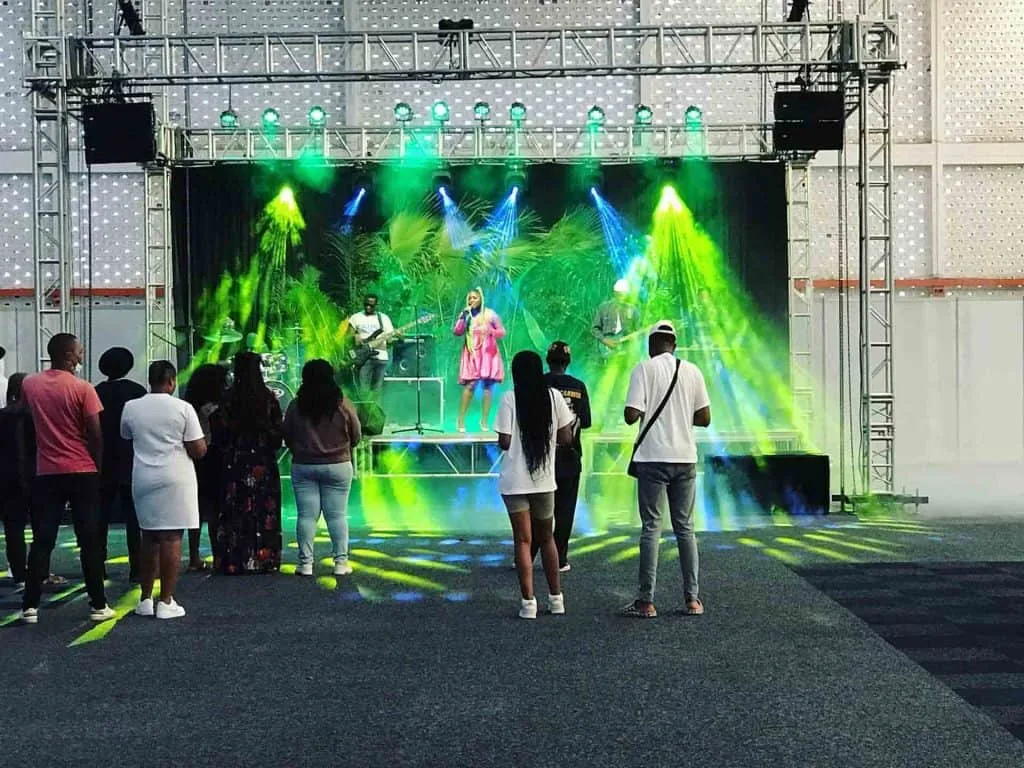
Do not assume a cabinet shown hanging in a photograph can be attached to every modular stand. The pictured exhibition stage is an application reference, not evidence of this booth’s load path or permits. Ask for a project-specific mounting detail, the equipment and accessories included in the supplier quote, and the local work excluded from it. If the venue rejects a proposed method, the stand and display proposal may both need revision.
What is the exhibition LED cabinet layout?
The exhibition LED cabinet layout translates a desired image area into identifiable physical units. It should show rows, columns, orientation, joins and the relationship to stand sections. For a reusable booth, label cabinets and cases so the crew can place equipment consistently at the next show. Identify where cable connections occur and which units can be reached for service. The content team also needs the approved pixel canvas for the final layout.
The rental-series LED display product is relevant to repeat assembly, dismantling and transport, but MVP LED does not advertise a screen-hire service. A fixed indoor LED display may be reviewed for a permanent presentation wall. Cabinet choice should follow the ownership and installation pattern; the mounting question remains separate and must be answered for the actual stand.
How should the crew assemble and test it?
| Stage | Handoff to verify | Record to keep |
|---|---|---|
| Stand support | Approved load path and attachment locations | Current support drawing |
| Display placement | Cabinet sequence and screen envelope | Cabinet map |
| Power and signal | Connections before finishes conceal routes | AV and electrical diagram |
| Media test | Correct source, mapping and visible content | Test file and acceptance note |
| Dismantling | Case order, protection and inventory | Packing schedule |
The schedule should reflect the available setup window. A screen can be physically mounted but not ready if processing, media or power remains untested. Ask the integrator to run a known file from the intended source path and review it from the planned audience point. If the stand must be dismantled after each show, the packing sequence should protect cabinets and keep accessories traceable.
Where should trade stand LED mounting leave service access?
Trade stand LED mounting must allow the service method of the chosen display. A front-service configuration needs an appropriate path at the face; a rear-service configuration needs clearance behind the display. Neither should be assumed from the product family name. The supplier should state the proposed system’s requirements and the booth designer should reserve the needed space. A storage closet, decorative panel or product pedestal can block access if it is drawn too late.
Also identify how technicians reach the display during an open show. The exhibitor may prefer a quick repair route that does not cut across a demonstration zone, but the venue controls access and safety rules. Record the responsible service party and spare-part location. The standard warranty baseline is two years, with final coverage set by the signed quotation and contract; warranty wording cannot substitute for physical access.
What should a scoped manufacturer response include?
Shenzhen MVPLED Technology Co., Ltd. develops and manufactures LED display systems in Shenzhen, China. Its approved process evidence covers SMT, module production and aging, cabinet assembly, system configuration, inspection, warehousing and packing. For a modular exhibition stand, ask for the proposed display system, cabinet map, control boundary, mounting interface, packing, destination basis, assumptions and exclusions. The local booth builder and installer should confirm the structure and assembly method.
MOQ, lead time, production capacity, spare parts and configuration depend on the product and project. Do not infer a fixed show-ready date from a website page. Give the supplier the show date and setup window, then request project-specific terms. A response should make the difference between factory-supplied hardware and local construction visible before procurement compares totals.
الأسئلة المتداولة
Can an LED screen attach directly to any modular booth frame?
No such universal assumption is safe. The booth builder and responsible venue or structural party must review the actual support and proposed mounting interface.
Does ground support remove the need for a stand review?
No. The base, occupied floor area, visitor path, cable route and local conditions still need a coordinated plan.
Who prepares the cabinet layout?
The LED supplier can propose a cabinet map for its system; the installer and booth builder should coordinate that map with the stand sections, supports and build sequence.
What is the most useful first file for a mounting discussion?
A dimensioned stand plan and elevation with the proposed display area, support concept, service access and setup window is more useful than a screen photograph alone.
Request a stand-specific mounting review
If you plan an LED screen in a modular exhibition stand, send MVP LED the booth drawings and assembly method. Identify the proposed support, audience view, controller location and setup schedule. Request a display-system quotation and interface information for the responsible booth team to review.
مراجعة المقال والمصادر
المؤلف: MVP LED Editorial Team, LED Display Product and Application Content. تمت المراجعة بواسطة: TOM, Product Manager. تاريخ المراجعة: November 12, 2026.
Sources: MVP LED booth mounting and build guidance; rental-series product definition; factory process; warranty terms. Company and project-variable facts are retained in the editorial source record.