NAKED-EYE 3D LED DISPLAY GUIDE
3D LED Display Hardware vs Content: Who Handles What?
3D LED display hardware vs content is a project-scope decision, not a choice between two interchangeable products. MVP LED supplies and configures the physical LED display system; the buyer or a content studio creates perspective video to the confirmed display dimensions and geometry. Both sides need a shared drawing and an agreed test process before a corner-facade proposal can become a comparable quotation.
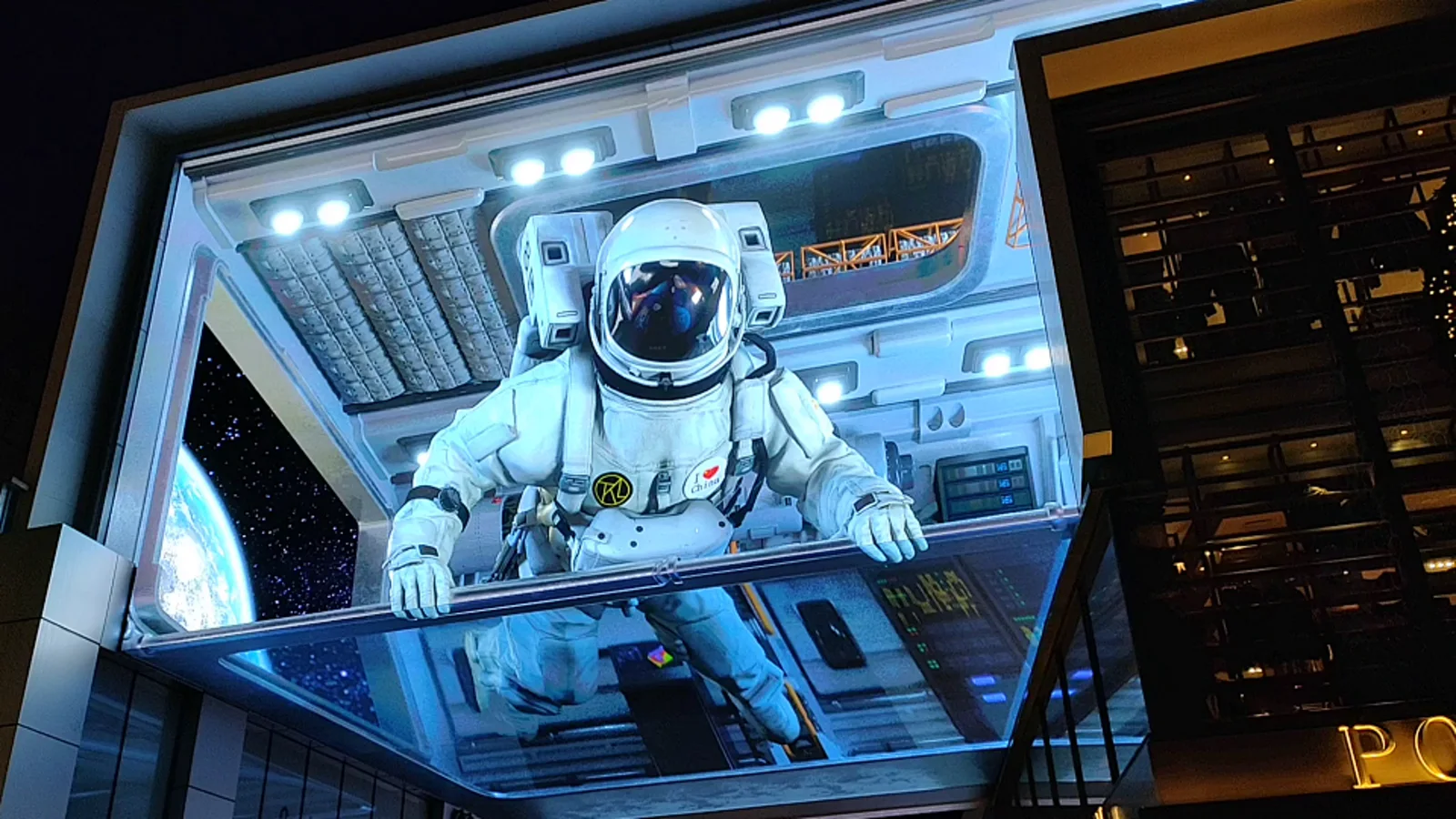
A naked-eye 3D LED effect depends on the relationship among a physical screen, the observer’s position, and a video made for that specific surface. An LED system cannot turn ordinary flat footage into a convincing architectural illusion by itself. Conversely, a compelling animation cannot correct an inaccurate corner model, an unplanned seam, or a video canvas that does not match the installed display. For buyers comparing a corner LED display or 3D LED billboard, the practical task is to identify each deliverable, its owner, and its approval point.
Who supplies the hardware, and who creates the 3D video?
For an MVP LED naked-eye 3D project, MVP LED supplies and configures the physical LED display hardware. The customer or a separately engaged content studio creates the perspective video using the final display dimensions and geometry supplied by MVP LED. The proposal determines the exact hardware and system boundary; it should not be assumed from a generic product image. The buyer should provide measured facade drawings, intended viewing positions, environmental and access information, and a named coordinator for the content team. The hardware and content teams should agree on a versioned geometry model, pixel canvas, corner transition, file-delivery specification, preview method, and on-site acceptance criteria. Ask each party to identify exclusions and buyer-supplied work in writing. This division makes a quotation easier to compare and prevents an attractive 3D sample from being mistaken for an included creative service or a finished site-specific installation.
The MVP LED 3D display solution page describes this division. The article below turns it into a procurement checklist for a single project; it does not imply that an illustrated reference image is a completed customer installation.
What belongs in a hardware supplier’s scope?
The physical scope starts with the display planes and their interface at the corner. Cabinet and module selection, power and receiving components, video processing or control, and project hardware may form part of a proposed system. The exact inclusion depends on the signed proposal. Ask for a drawing or schedule that identifies which components are included, how the planes join, where access is required, and which interfaces remain with the building team or installer.
For an outdoor facade, do not compare only the area of illuminated surface. Review mounting conditions, weather exposure, available power, signal route, service approach, and the practical route for getting equipment into place. The outdoor LED display range provides related product context, but it does not replace site drawings or a corner-specific technical review.
Hardware deliverables worth requesting
- A dimensioned layout of each display plane and the corner transition.
- A configuration schedule showing the proposed LED system and control boundary.
- Power, signal, structural and service interface assumptions for contractor review.
- The pixel canvas dimensions and mapping information needed by the content creator.
- An inclusion and exclusion list tied to the quotation revision.
Shenzhen MVPLED Technology Co., Ltd. develops and manufactures LED display systems in Shenzhen, China. Its approved manufacturing evidence covers SMT, module production and aging, cabinet assembly, system configuration, inspection, warehousing, and packing. These are manufacturing-process facts, not a substitute for a project-specific structural or creative-content commitment.
What belongs in the content creator’s scope?
Perspective content is designed around a particular display geometry and intended viewing position. The content creator needs the final width, height, corner angle, plane relationship, seam position, pixel map, and information about the viewer’s approach. A sample animation made for another facade may illustrate an artistic direction, but it cannot serve as the final deliverable for this building without adaptation and approval.
Ask the content team to state who owns concept development, storyboards, modeling, animation, perspective calibration, revisions, export, and final media files. If audio, interaction, scheduling, or multiple languages are needed, record them as separate requirements; they should not appear as silent assumptions inside an LED hardware quotation. The buyer should also establish the right to use the final creative assets and confirm any third-party approvals with the relevant creator.
Content handoff that prevents avoidable rework
Share one controlled geometry package with a revision number. Content mockups should be reviewed against that package from the intended viewing point, not only on a desktop screen. If a building survey changes the corner angle or usable display area, update the content brief before final export. Record whether preview approval is visual direction only or acceptance of the actual mapped media; those are different decisions.
Which interface decisions must both teams make together?
| Decision | Hardware-side input | Content-side input | Buyer approval |
|---|---|---|---|
| Corner geometry | Final display plane dimensions and seam position | Perspective scene and virtual camera | Signed drawing revision |
| Canvas and mapping | Pixel layout and controller output plan | Master file dimensions and split exports | Test file plays correctly on the agreed system |
| Viewing position | Physical screen location and sight lines | Designed illusion viewpoint | Named on-site review positions |
| Change control | Record of display geometry revisions | Rework and export implications | One approved version for both teams |
This table is a coordination aid, not a claim that MVP LED sells or manages every creative workstream. The buyer can appoint an integrator, a venue contractor, or an internal project manager to maintain the common record.
How should a buyer compare two 3D LED display quotations?
Start by giving both bidders the same measured building information and intended effect. Ask each to return a system description, component scope, display geometry, control interfaces, site assumptions, exclusions, and the data it will provide to the content team. A lower apparent total may simply omit structural work, installation, content, commissioning, or a controller that another proposal includes. The comparison should expose those differences rather than forcing an artificial single-number ranking.
Use a responsibility matrix with four columns: supplied by the LED manufacturer, supplied by the buyer, supplied by an installer, and supplied by the content studio. Mark every item either confirmed, assumed, or open. Separate any creative-fee quotation from the physical-display quotation unless a written proposal explicitly combines them. This makes the cost boundary visible and avoids asking a hardware supplier to answer for a third party’s animation schedule.
MOQ, lead time, spare parts, production capacity, and final project configuration depend on the product and requirements. The standard warranty baseline is two years, with final coverage defined by the signed quotation and contract. Ask which specific hardware and services the warranty wording covers rather than extending it by assumption to creative content or construction work.
What should happen before purchase approval?
Confirm that a current survey, facade drawings, and the intended viewing zone describe the same building revision. Obtain one system drawing and one content canvas that share dimensions, orientation, and a corner reference. Have the installation party review access, structure, and interfaces. Then ask the content creator to make a short proof or mapped test for the proposed geometry. A test should expose seam and perspective issues while changes are still manageable.
Define acceptance in observable terms: which file is played, which display revision is installed, where reviewers stand, and what issue would trigger a correction. If the viewer can approach from many directions, agree which position controls the 3D effect and which positions are informative only. Naked-eye perspective is viewpoint-dependent; a single promise that it will look identical everywhere would be misleading.
For unconventional facade transitions, review creative LED display formats as related design context. Keep its application examples separate from the approved solution for this site.
الأسئلة المتداولة
Does the LED hardware create the naked-eye 3D effect by itself?
No. The display shows the video, while the perspective illusion depends on content made for the display geometry and viewing position. The two workstreams require a shared technical basis.
Does MVP LED automatically include 3D animation in its display quotation?
No such inclusion should be assumed. MVP LED’s published 3D solution describes the customer or a content studio creating perspective video. Check the exact creative scope in the written proposal.
Can a content studio begin before the LED configuration is final?
It can explore a concept, but final mapping and export should use controlled, approved dimensions and geometry. Mark early models as provisional so a site or hardware change does not masquerade as an error in finished content.
What is the most useful first file to send a manufacturer?
A dimensioned facade drawing with the corner, proposed display area, viewing location, access constraints, and current revision is more actionable than a generic animation sample alone. Include the sample as a creative reference if it helps explain the desired effect.
Request a coordinated hardware proposal
If your project is at the feasibility or quotation stage, send MVP LED the facade drawings and intended viewing position. Explain who will create the media and who will install the system. Request the display geometry, hardware scope, content handoff data, assumptions, exclusions, and project-specific commercial terms in the reply.
مراجعة المقال والمصادر
المؤلف: MVP LED Editorial Team, LED Display Product and Application Content. تمت المراجعة بواسطة: TOM, Product Manager. تاريخ المراجعة: November 5, 2026.
Sources: MVP LED 3D display solution and hardware/content boundary; factory and production process; warranty and services. Project variables and approved company identity are retained in the editorial fact record.