
LED DISPLAY PROJECT GUIDE
LED Billboard vs Building-Facade Display: How to Choose
When comparing an LED billboard vs building-facade display, choose by the site and operating model rather than by screen size alone. A billboard is usually planned as a distinct advertising structure or clearly bounded display installation, while a facade display must be coordinated as part of the building envelope and architecture. The better format is the one that fits the viewing zone, structural concept, service route, content plan, approval responsibilities, and complete quotation scope.
Both formats can use an outdoor LED screen, but they create different coordination work. This guide gives buyers a practical way to define the project before asking suppliers to quote.
Start with the project role, not the product label
First define what the display must do. Record whether it is intended for roadside advertising, a commercial property, a retail destination, a venue, public information, or a mixed content program. Then define who owns the display, who controls the site, who supplies content, and who operates and maintains the system.
The terms billboard and facade display are sometimes used loosely. Avoid making a purchase decision from the label alone. Ask every bidder to mark the display boundary, supporting structure, surrounding construction, service direction, control scope, and buyer-supplied work on the same set of drawings.
Buyers can review MVP LED’s outdoor LED display options for category context, but the final configuration must be based on the documented project conditions.
LED billboard vs building-facade display at a glance
| Decision area | LED billboard | Building-facade display |
|---|---|---|
| Project relationship | A distinct advertising structure or clearly bounded display installation | Integrated with a building elevation, cladding zone, or architectural feature |
| Primary coordination | Site position, support, viewing direction, access, power, signal, and operating boundary | Facade geometry, support interfaces, finishes, waterproofing coordination, access, power, signal, and building operations |
| Drawing focus | Site plan, elevation, support concept, service route, and surrounding clearances | Building elevation and sections, facade details, openings, support interfaces, and protected service zones |
| Service planning | Technician and component routes around or behind the display structure | Front, rear, roof, interior, or combined routes coordinated with the completed building |
| Content context | Usually evaluated from defined external viewing approaches | Must also work with the building’s architecture, tenants, entrances, and nearby public space |
| Quotation risk | Unclear civil, structural, access, and utility responsibilities | Unclear facade, finish, access, interface, and building-contractor responsibilities |
This table does not make one format universally better. It shows why the buyer should compare project interfaces before comparing commercial totals.
Choose a billboard when the display should be a distinct site element
An outdoor LED billboard may be the clearer planning model when the display has its own defined position, support concept, access zone, and advertising purpose. The site plan should show the display in relation to roads, property boundaries, buildings, landscaping, traffic circulation, utilities, and the intended viewing approaches.
The project team should identify who provides the support and related site work, who verifies local conditions, and who coordinates power and signal routes. The supplier needs measured drawings and site information before a project-specific configuration can be proposed.
Billboard planning questions
- Where are the intended viewing approaches and decision points?
- What are the measured site boundaries and surrounding obstructions?
- Who owns and verifies the support concept and site conditions?
- How will technicians and replacement components reach the screen?
- Where will power, signal, control, and network equipment be located?
- Which site work belongs to the buyer, supplier, or another contractor?
- Who controls content, operating hours, and site access?
A clear response to these questions gives bidders a common basis. Without it, one quotation may include work that another leaves as an assumption or exclusion.
Choose a facade display when the building is part of the design
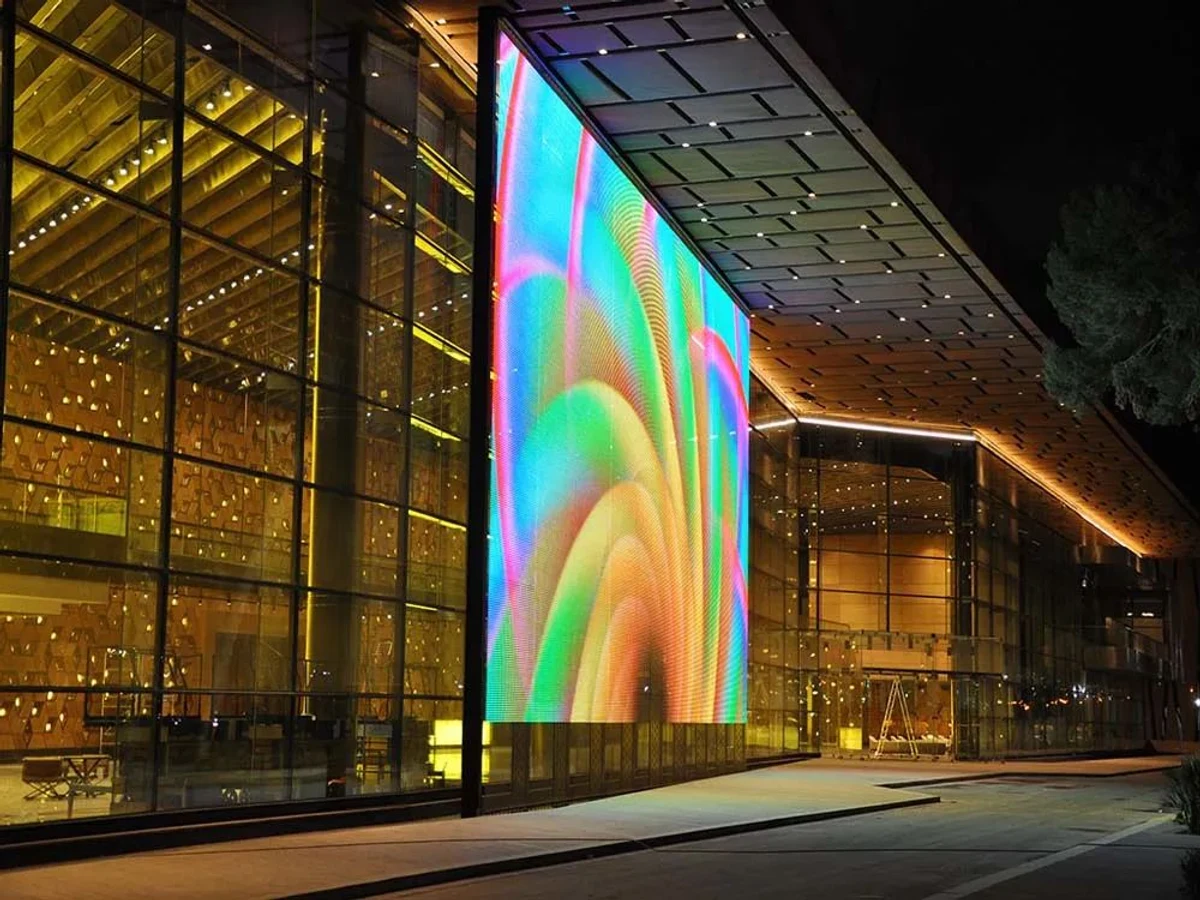
A building-facade display may be appropriate when the LED surface is intended to align with an elevation, cladding zone, entrance, corner, canopy, or other architectural feature. In this case, the screen cannot be planned independently from the building.
Provide elevations and sections that show the available opening, support zones, surrounding finishes, doors, windows, roof edges, drainage paths, service areas, and nearby equipment. Identify which drawings are measured site records and which are design proposals still subject to revision.
For commercial LED advertising applications, include property operations and tenant coordination. A facade installation can face a public area while its access route passes through controlled back-of-house, roof, or interior space.
Facade coordination questions
- Which building elements define the display geometry?
- Which party coordinates the display with cladding and surrounding finishes?
- Can every screen zone be reached after construction is complete?
- Will doors, windows, canopies, signs, landscaping, or tenant work obstruct access?
- How are display, building, and site responsibilities separated?
- Which revisions require the display drawings to be checked again?
The facade option is not simply a billboard attached to a wall. Its success depends on interface control throughout design, installation, and handover.
Map viewing conditions before setting geometry
Record where people will see the display, how they approach it, and what may block the view. Use site photographs and a plan with named viewing zones. Separate long approaches from close pedestrian areas, and identify angles where the building or support may hide part of the display.
For a billboard, the dominant approaches may guide orientation and the visible screen boundary. For a facade display, the architecture may create several viewing zones with different relationships to entrances, streets, plazas, upper floors, or neighboring buildings.
Content should be considered at the same time. Ask who creates it, what aspect ratio and canvas the project expects, how often it changes, and how the visual composition relates to the physical display. Do not finalize a complex outline without checking that the content workflow can support it.
Compare structure and building interfaces
Ask the responsible project professionals to define and verify the support and existing conditions. The LED supplier can provide project information and a proposed display arrangement, but the quotation should state which structural, civil, facade, and installation tasks are included, excluded, or supplied by others.
A billboard brief should identify the support concept, foundation or building connection as applicable, site clearances, and the interface between the display and other contractors. A facade brief should add cladding, trim, openings, weather-related interfaces, and the sequence in which surrounding construction will be completed.
Use revision-controlled drawings. If the screen geometry, support, opening, cladding, platform, or service route changes, review the complete display scope again before approval.
Make maintenance access visible on the drawings
Service access affects both formats and should not be left to a note saying access will be provided. Draw the route from the controlled site entrance to each service position. Show doors, stairs, platforms, hatches, roof areas, rear spaces, front working zones, barriers, structure, equipment, and other obstacles.
For a billboard, check how technicians and components move around or through the supporting structure. For a facade display, check whether the completed architecture preserves the front, rear, roof, side, or interior route assumed in the proposal.
Ask bidders to explain the service direction for each display zone, the access equipment assumed, and the responsibilities for temporary or permanent arrangements. If the route depends on work by others, name that work in the quotation.
Define power, signal, control, and operating ownership
Mark the planned locations of electrical distribution, signal pathways, network devices, control equipment, and operator positions. Identify which party supplies, connects, configures, tests, and maintains each part of the project.
The operating model matters. A standalone advertising structure and a display integrated with a commercial building may have different security, scheduling, content-approval, and access procedures. Capture those differences in a responsibility matrix before procurement.
Avoid generic assumptions. The signed project documents should define the selected configuration, connected systems, interfaces, and responsibilities for the actual site.
Build a quotation package that exposes scope differences
Send every bidder the same current documents and require a structured response. A practical outdoor LED display planning package should include the following:
- Project objective, content use, and operating owner
- Measured site plan, elevations, sections, and current photographs
- Intended viewing zones and surrounding obstructions
- Proposed screen boundary and geometry
- Support and building-interface information
- Technician route, working zones, and component route
- Power, signal, network, control, and operator locations
- Responsibility matrix for supplier, buyer, and other contractors
- Requested documentation, inspection, packing, delivery, installation, and handover scope
- Project-dependent commercial items and open questions
Ask each supplier to return marked drawings, inclusions, exclusions, buyer-supplied work, assumptions, and unanswered inputs. Normalize these items before comparing prices. A lower total may represent a narrower scope rather than a lower cost for the same project.
Review manufacturing, quality, and commercial terms
Shenzhen MVPLED Technology Co., Ltd. develops and manufactures LED display systems in Shenzhen, China. Approved manufacturing evidence covers SMT, module production and aging, cabinet assembly, system configuration, inspection, warehousing, and packing.
Use the published MVP LED quality-control process to prepare project-specific questions about inspection, records, system configuration, packing identification, and handover documentation. Connect those questions to the approved drawings and responsibility matrix.
MOQ, lead time, production capacity, spare parts, and project configuration vary by product and project requirements. Confirm each item in the project quotation rather than copying a generic value. The standard warranty baseline is two years; final coverage is defined by the signed quotation and contract.
A simple decision sequence
- Define the role. Decide whether the project is primarily a distinct advertising installation or an architectural display integrated with the building.
- Verify the site. Collect measured drawings, photographs, viewing zones, access routes, utilities, and surrounding constraints.
- Map interfaces. Identify structural, civil, facade, finish, electrical, signal, control, content, and operational responsibilities.
- Test serviceability. Confirm how technicians and components reach every zone after the site is complete.
- Issue one RFQ basis. Give all bidders the same documents and request marked assumptions, exclusions, and open information.
- Compare complete scope. Evaluate the proposed configuration, responsibilities, records, commercial terms, and unresolved risks together.
If the building defines the display geometry and interfaces, treat it as a facade project. If the display is a distinct structure with its own site boundary and access concept, treat it as a billboard project. If the project contains both conditions, divide it into clearly named zones and require the supplier to explain each one.
Frequently Asked Questions
Is an LED billboard always freestanding?
No. Buyers may use the term for different outdoor advertising arrangements. Define the actual support, location, building relationship, and service route instead of relying on the label.
Can a building-facade display use the same planning process as a billboard?
They share core checks for viewing, support, access, power, signal, control, content, and responsibilities. A facade project also needs detailed coordination with the building elevation, sections, finishes, openings, and operating areas.
Which format is easier to maintain?
Neither format is automatically easier. Maintenance depends on the service direction, continuous technician route, working space, component path, surrounding structure, site rules, and responsibilities documented for the project.
What should buyers send before requesting a quote?
Send measured plans and elevations, site photographs, the intended display boundary, viewing zones, support and facade information, access routes, utility and control locations, content needs, responsibility expectations, and the requested project scope.
Choose from documented site conditions
The best answer to LED billboard vs building-facade display comes from drawings and responsibilities, not a generic product preference. Define the installation’s role, map its interfaces, protect service access, and compare quotations against one complete project brief.
To discuss a project-specific configuration, send MVP LED your project brief with current drawings, photographs, viewing zones, display geometry, access plan, content requirements, and responsibility matrix.
Article Review and Sources
Author: MVP LED Editorial Team, LED Display Product and Application Content
Reviewed by: TOM, Product Manager
Review date: August 8, 2026
Approved MVP LED sources: Outdoor LED Display, Quality Control, and Warranty and Services. Company identity and project-variable records are retained in the editorial source log.