
OUTDOOR LED DISPLAY PLANNING GUIDE
Cost of an Outdoor LED Display Project: Key Scope Factors
The cost of an outdoor LED display project depends on the complete project scope: display geometry, site conditions, support and installation method, service access, power and signal interfaces, control requirements, documentation, logistics, responsibilities, and commercial terms. Buyers get more useful quotations when they define these inputs before comparing prices instead of asking for a screen-only figure.
There is no responsible universal price based only on width and height. Two outdoor LED screens with a similar visible area may require different structures, access arrangements, site work, control scope, packing, or handover support. This guide explains which variables to document and how to compare supplier responses without relying on invented cost numbers.
Separate display supply from total project cost
Begin with two columns: what the display supplier is expected to provide and what the buyer or other contractors will provide. The first column may cover the agreed display system, project-specific configuration, inspection, packing, documents, and any quoted services. The second may include site verification, structural work, building interfaces, electrical distribution, network access, lifting, local installation work, approvals, or operating resources, depending on the project.
Do not assume the boundary is standard. Ask every bidder to return a responsibility matrix, inclusions, exclusions, assumptions, and required information. A quotation that looks lower may simply place more work outside the supplier’s scope.
Review the relevant outdoor LED display systems for category context, then connect the request to measured site drawings and an explicit work breakdown.
Cost factors buyers should compare
| Scope area | Information to provide | Why it changes the quotation |
|---|---|---|
| Display geometry | Measured width, height, outline, orientation, and viewing zones | Defines the proposed display arrangement and project-specific configuration |
| Site and support | Plans, elevations, sections, photographs, existing conditions, and proposed support interface | Changes coordination, installation method, and work assigned to each party |
| Service access | Front or rear approach, technician route, working zones, and component path | Affects layout, surrounding construction, access provisions, and service planning |
| Power and signal | Available locations, routes, equipment boundaries, and responsible parties | Clarifies connected scope and prevents missing interface work |
| Control and content | Operator location, network conditions, content workflow, and required responsibilities | Defines system coordination, configuration, testing, and handover needs |
| Installation and logistics | Delivery point, site restrictions, storage, lifting, crew scope, and schedule constraints | Changes packing, handling, site services, and responsibility allocation |
| Quality and documents | Inspection points, records, drawing revisions, packing identification, and handover package | Defines the evidence and project controls included in the response |
| Commercial terms | Project-specific quantities, timing, spare-parts needs, warranty terms, and contract boundary | Prevents generic assumptions from being treated as confirmed commitments |
Use this table as an RFQ index. A bidder should either answer each item or identify it as open, excluded, or dependent on later information.
1. Display geometry and viewing requirements
Provide the intended screen boundary, measured dimensions, orientation, and any non-rectangular zones. Mark the primary viewing approaches, nearby obstructions, property features, and the relationship between the screen and surrounding architecture.
Geometry is not only a visible-area decision. It also affects the arrangement that must be coordinated with support, access, power, signal, content, and installation. Changes after quotation can alter several scope areas at once.
Geometry inputs for the RFQ
- Current plan, elevation, and section drawings
- Site photographs with named viewpoints
- Proposed screen outline and available installation space
- Nearby signs, windows, roads, landscaping, and equipment
- Content canvas, ownership, and operating purpose
- Known design revisions or unresolved site decisions
Ask the supplier to state which dimensions and assumptions were used. This makes later revisions easier to trace and avoids comparing proposals built on different layouts.
2. Support and installation method
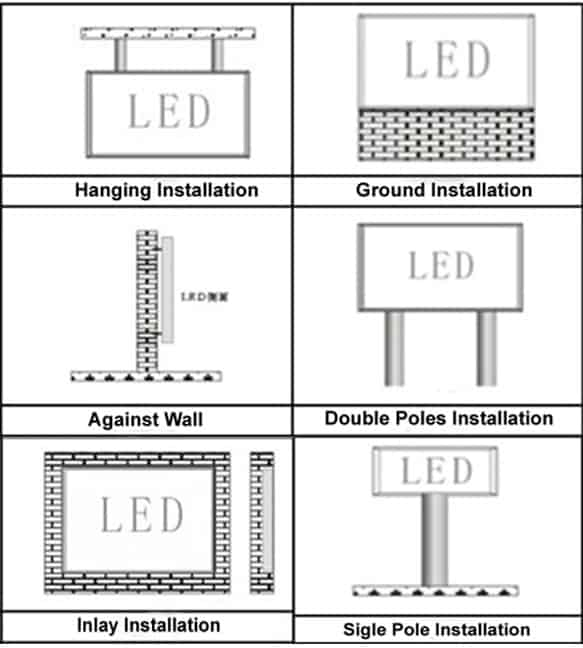
An outdoor LED billboard, wall-mounted display, hanging display, ground-supported installation, and pole-supported installation do not share the same project interfaces. The RFQ should show the intended concept and identify who verifies the existing building, ground, or support conditions.
The responsible project professionals should define and verify structural and site requirements. The display proposal should identify the information it needs and the boundary between display supply, support work, civil work, facade work, and installation services.
Request marked drawings rather than a general note that structure is excluded. The response should show where the display connects, which work is supplied by others, and which changes would require a revised quotation.
3. Maintenance access and working space
A screen can fit the site but still be difficult to service. Decide whether technicians approach from the front, rear, side, roof, platform, or a combined route. Show how they enter the controlled area, reach every display zone, place tools, and move components.
For rear service, document the usable route behind the screen rather than a nominal gap. For front service, protect the working area from signs, landscaping, barriers, canopies, or public circulation that may block access after construction.
Access questions that affect scope
- Who provides permanent platforms, doors, walkways, or access openings?
- Who supplies temporary access or lifting equipment when required?
- Which areas need security, traffic, tenant, or public-space coordination?
- Can components travel through every turn, opening, and level change?
- Who owns and maintains access drawings after handover?
When access responsibilities are unclear, bidders may price different service concepts or omit site arrangements entirely. Normalize these differences before comparing totals.
4. Power, signal, control, and content boundaries
Mark the locations and planned routes for electrical distribution, signal, network, control equipment, and operator positions. Identify the party responsible for supplying, connecting, configuring, testing, and maintaining each interface.
Content is also part of outdoor LED display planning. Describe who creates and approves content, the intended canvas, operating workflow, and any site or property procedures that affect playback. The hardware quotation should not silently assume services or systems that have not been defined.
For commercial LED advertising applications, include property operations, tenant relationships, access hours, and control ownership. These responsibilities may sit outside the visible display but remain necessary for a complete project.
5. Site installation and local coordination
Describe delivery access, storage availability, working hours, restricted areas, lifting routes, crew responsibilities, and the condition in which the site will be handed to the installer. Note whether the project is new construction, a renovation, or work at an operating property.
List the parties that coordinate structure, facade, electrical work, network, content, safety controls, site protection, and final acceptance. The supplier should state which site services are included and which must be arranged locally.
Do not use an assumed installation method as a substitute for a site plan. The approved installation diagram shows several possible concepts, but the project quotation must select and document the method suitable for the actual location.
6. Manufacturing review, inspection, and records
Shenzhen MVPLED Technology Co., Ltd. develops and manufactures LED display systems in Shenzhen, China. Approved manufacturing evidence covers SMT, module production and aging, cabinet assembly, system configuration, inspection, warehousing, and packing.
Ask how the supplier connects the approved project drawings to configuration, inspection, packing identification, and handover records. Review the published MVP LED quality-control process and turn relevant stages into project-specific questions.
The RFQ should state which documents are expected before production review, before shipment, and at handover. A clear document list makes responses easier to compare and reduces late disagreement about what evidence belongs in the quoted scope.
7. Packing, logistics, and spare-parts planning
Define the delivery destination, receiving conditions, storage constraints, handling sequence, and the party responsible after the agreed delivery point. Ask how packages will be identified against the display layout and project documents.
Spare parts vary by product and project requirements. Instead of copying a generic quantity, describe the operating context, local service capability, storage plan, and desired handover responsibility. Ask the supplier to propose and identify project-specific items in the quotation.
MOQ, lead time, production capacity, spare parts, and project configuration vary by product and project requirements. They should be confirmed in the actual quotation rather than published as universal promises.
8. Warranty and service terms
MVP LED’s standard warranty baseline is two years; final coverage is defined by the signed quotation and contract. Buyers should review what is covered, the agreed start point, responsibilities for access and labor, communication procedures, documentation, and the treatment of project-specific items.
Do not compare warranty duration alone. Compare the signed scope, exclusions, site responsibilities, and the records needed to support service. If local support or additional services are requested, require them to appear as explicit quotation items.
How to compare outdoor LED display quotations
Create a comparison sheet with one row for every RFQ requirement and one column for each bidder. Record whether the item is included, excluded, buyer-supplied, optional, or awaiting information. Add a notes column for drawing references and assumptions.
- Confirm that every proposal uses the same display geometry and current drawing revision.
- Separate display-system scope from structure, site work, access, electrical, network, and installation scope.
- Compare control, configuration, testing, documents, packing, and handover responsibilities.
- Identify open inputs that may change the quotation later.
- Review project-specific timing, spare parts, warranty, and commercial terms.
- Resolve important scope gaps before choosing on total price.
This process does not force suppliers into identical technical proposals. It makes the commercial boundaries visible so the buyer can understand what each total actually covers.
Frequently Asked Questions
Can the cost be estimated from screen size alone?
Screen size is only one input. Site conditions, geometry, support, access, power and signal interfaces, control scope, installation, logistics, documentation, responsibilities, and commercial terms can all change the project scope.
Why do quotations for a similar screen size differ?
They may use different assumptions, configurations, services, documents, installation boundaries, or buyer-supplied work. Compare the responsibility matrix and inclusions before treating the totals as equivalent.
Should the lowest quotation be selected?
First check whether it covers the same drawings, system boundary, access concept, project services, records, logistics, and commercial responsibilities. A lower total can reflect a narrower scope or more unresolved items.
What should a buyer provide for a more accurate quotation?
Provide measured drawings, site photographs, viewing zones, display geometry, support information, service routes, power and signal locations, control and content needs, installation conditions, responsibility expectations, and the requested documentation and commercial scope.
Prepare one complete quotation brief
The best way to understand the cost of an outdoor LED display project is to define the work before comparing prices. A complete brief helps the buyer, supplier, installer, and other contractors discuss the same geometry, site, interfaces, responsibilities, and records.
For a project-specific review, send MVP LED your quotation brief with current drawings, photographs, display dimensions, viewing zones, installation concept, access plan, power and signal information, content workflow, and responsibility matrix.
Article Review and Sources
Author: MVP LED Editorial Team, LED Display Product and Application Content
Reviewed by: TOM, Product Manager
Review date: August 8, 2026
Approved MVP LED sources: Outdoor LED Display, Quality Control, and Warranty and Services. Company identity and project-variable records are retained in the editorial source log.