
INDOOR LED DISPLAY PLANNING GUIDE
Indoor LED Display Planning: Viewing Distance and Layout
Indoor LED display planning should begin with the nearest and typical viewing positions, the usable wall area, the room circulation pattern, and the content people need to read. These inputs define the right questions for screen size, layout, installation access, and system review. Buyers get a more useful proposal when they provide a measured room plan and content examples instead of choosing an indoor LED video wall from one specification alone.
The goal is not to make the display as large or as detailed as possible. The goal is to create a display that fits the audience, the room, the content, and the operating workflow. A boardroom, retail interior, control environment, and event hall can place viewers at very different distances even when the available wall dimensions appear similar.
What should be decided before selecting an indoor LED display?
Start by documenting how the room will actually be used. Identify where people enter, stand, sit, present, operate equipment, and move in front of the screen. Mark the nearest expected viewer, the usual audience zone, and the farthest position from which important content must remain understandable.
Next, define the content. A screen used mainly for large video images has a different planning priority from one used for dashboards, presentation slides, pricing, wayfinding, or mixed media. The smallest important text, the number of simultaneous content windows, and the source aspect ratios all affect the usable canvas.
Record physical constraints at the same time. Buyers should note the available width and height, wall structure, floor-to-ceiling conditions, doors, service corridors, ventilation paths, power locations, signal routes, and any architectural elements that cannot be moved. Photographs help, but dimensioned drawings reduce ambiguity.
| Planning input | What to document | Why it matters |
|---|---|---|
| Viewing positions | Nearest, typical, and farthest audience zones | Connects visual detail and screen scale to real use |
| Content | Text size, video formats, dashboards, and source layouts | Shows what must remain legible and how the canvas will be divided |
| Wall and room | Usable dimensions, obstructions, circulation, and ambient conditions | Prevents a screen concept from conflicting with the space |
| Installation | Support structure, access route, service side, power, and signal paths | Allows the complete installation approach to be reviewed |
| Operations | Content owners, source devices, control location, and maintenance access | Connects the screen to daily use after installation |
Use these inputs when you review indoor LED display options. They make the conversation about the complete application instead of an isolated cabinet quantity.
How does viewing distance affect the layout decision?
Viewing distance is not one number for the entire room. The closest person may be a presenter or operator, while the main audience sits farther away. A useful plan separates these positions and ranks their importance. If close viewers must read detailed information, the supplier needs that requirement. If the screen is primarily a visual background for a distant audience, the emphasis may shift toward overall canvas size and content composition.
Map viewer zones instead of using a single estimate
Place the proposed screen on a floor plan and draw simple viewer zones. Zone A can represent the nearest expected position, Zone B the normal audience area, and Zone C the farthest decision point. For each zone, write down what a person must recognize: large imagery, a speaker name, presentation text, numerical data, or several content windows.
This exercise helps a buyer distinguish an occasional close pass from a critical close viewing position. It also exposes off-axis locations. A room may have adequate distance straight in front of the display but poor sightlines from side seating, a reception counter, or a control desk.
Review content at realistic scale
Do not judge the layout only from a rendering that fills a laptop screen. Prepare representative content and identify its smallest essential elements. Note whether the design team can adjust typography and layouts for the final canvas. An indoor LED wall planning discussion is stronger when the supplier can see the real presentation, dashboard, or campaign format.
For rooms built around meetings and presentations, buyers can also explore LED displays for corporate and conference spaces to compare the application context with the general indoor category.
How should screen size and room layout be coordinated?
Begin with the usable architectural opening, then reserve the areas needed for structure, access, and surrounding finishes. The visible display size and the total installation envelope are related but not identical. A concept that fits the front elevation may still be difficult to bring into the building or service later.
Check the proposed width and height against the content aspect ratios. If most sources use a common widescreen layout, a radically different canvas may require cropping, unused areas, or custom content. If multiple sources will appear together, sketch the intended windows before confirming the final proportions.
Consider visual balance within the room. The display should align with seating, presentation areas, counters, or architectural axes where appropriate. Verify that doors, signs, cameras, lighting fixtures, and loudspeakers do not interrupt sightlines. For public interiors, also map pedestrian flow so the screen does not pull attention toward a conflict point.
The plan should identify the control position and cable routes. Source equipment may be located near the display or in another technical area, so the project brief should show where signals originate and who operates them. This is a coordination input, not a detail to postpone until installation.
What installation and service details belong in the brief?
An indoor display is part of a complete system. The buyer should state whether the screen will be wall-mounted, supported by a structure, integrated into millwork, or coordinated with another construction package. Include information about wall composition and the route through which equipment reaches the final location.
Service access should be planned before finishes are closed. Mark whether access is expected from the front, rear, or an adjacent service area, and identify any limits around the display. The supplier and installer can then review the cabinet arrangement, surrounding clearances, and service workflow together.
Power and signal responsibilities also need named owners. The brief should clarify which contractor provides circuits, distribution, cable pathways, data connections, structural work, and final finishing. It should also identify the party responsible for screen installation, system configuration, content setup, and acceptance coordination.
MVP LED’s registered manufacturing evidence covers SMT, module production and aging, cabinet assembly, system configuration, inspection, warehousing, and packing. Buyers who want to understand that path can review the MVP LED quality-control process. Project configuration, spare parts, lead time, production capacity, and order requirements vary with the product and project, so these items should be confirmed in the specific quotation rather than assumed from a general article.
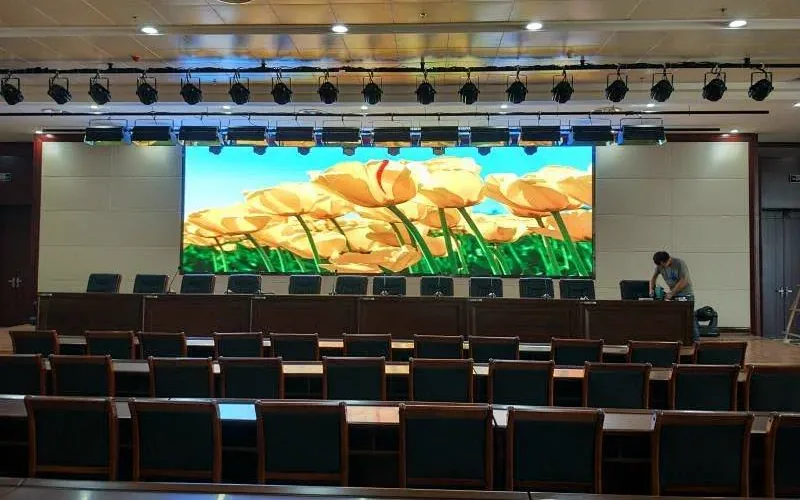
How should buyers compare a fine-pitch LED display proposal?
A proposal should be reviewed as a system response to the brief. A finer specification by itself does not confirm that the screen geometry, content workflow, structure, access, and project responsibilities have been solved. Ask each supplier to state the assumptions behind the proposed configuration.
Use the same room plan, viewer-zone map, content samples, and scope checklist for every supplier. This makes differences easier to identify. If one response assumes a different screen size, control method, service approach, or installation responsibility, clarify that difference before comparing commercial totals.
The phrase fine-pitch LED display is often used during early research, but procurement should stay tied to the actual application. Ask how the proposed arrangement addresses the closest critical viewer and the smallest essential content. Then ask how the full display fits the wall, how it will be serviced, and what information remains open for confirmation.
Proposal comparison checklist
- Does the proposal use the same measured screen area and room constraints?
- Does it identify the nearest critical viewing position and normal audience zone?
- Does it reflect representative content and intended window layouts?
- Does it state the installation and service-access assumptions?
- Does it define power, signal, control, structure, and finishing responsibilities?
- Does it list project-dependent items that still require confirmation?
- Does the quotation define the final commercial terms and warranty coverage?
MVP LED’s standard warranty baseline is two years, while final coverage is defined by the signed quotation and contract. Confirm that the proposal you review records the applicable coverage rather than relying on a general expectation.
What should an indoor LED display request for quotation include?
A concise request for quotation can still be complete. Start with the project location, application, target schedule, and purchasing party. Attach a dimensioned plan and front elevation. Add photographs that show the wall, access route, surrounding finishes, and audience area.
List the screen’s intended width and height if known, but label preliminary dimensions clearly. Provide viewer zones, typical content, source devices, and expected operating hours as project inputs for review. Identify whether audio, cameras, presentation systems, control equipment, or third-party construction work must coordinate with the display.
State the expected installation and service method, or ask the supplier to recommend an approach based on the drawings. Name the party responsible for structure, power, data, installation labor, configuration, commissioning coordination, and content preparation. Finally, request that exceptions and assumptions be shown clearly in the response.
This information gives Shenzhen MVPLED Technology Co., Ltd., an LED display system developer and manufacturer in Shenzhen, China, a defined basis for reviewing the application. It also gives the buyer a record that can be shared with the architect, integrator, contractor, and internal decision makers.
Frequently Asked Questions
Should viewing distance be the only basis for selecting an indoor LED display?
No. Viewing positions are a primary input, but content, screen dimensions, sightlines, service access, structure, power, signal routes, and operating workflow should be reviewed together.
What information is most useful for an initial supplier review?
Provide a dimensioned room plan, usable wall area, nearest and typical viewing positions, representative content, installation constraints, access route, and a list of project responsibilities. Mark any information that is still preliminary.
How can buyers compare two indoor LED video wall proposals?
Give both suppliers the same brief and compare their assumptions as well as their proposed systems. Check screen geometry, viewing zones, content layout, service method, scope boundaries, project-dependent items, and quotation terms.
When should content planning begin?
Content planning should begin before the final canvas is confirmed. Representative files help the project team review proportions, text legibility, source layouts, and the need for multiple content windows.
Prepare the next project review
A practical indoor display decision begins with a shared set of drawings, viewer zones, content examples, and responsibilities. That record helps the supplier review the full system and helps the buyer compare responses without hidden assumptions.
For a project-specific review, send MVP LED your project brief with the room dimensions, viewing positions, content type, target screen area, installation constraints, and expected schedule.
Article Review and Sources
Author: MVP LED Editorial Team, LED Display Product and Application Content
Reviewed by: TOM, Product Manager
Review date: August 4, 2026
Approved MVP LED sources: Indoor LED Display and Quality Control. Company identity, project-variable, manufacturing-process, and warranty records are retained in the article’s editorial source log.