
INDOOR LED DISPLAY PLANNING GUIDE
What to Include in an Indoor LED Display RFQ
An indoor LED display RFQ should define the application, measured screen area, audience and content, site and access conditions, service method, system scope, project responsibilities, quality-review expectations, commercial terms, and acceptance process. Give every invited supplier the same information and ask each one to state assumptions and exclusions. That produces responses that are easier to compare than requests based only on screen width, height, or a preferred pixel pitch.
This buyer-side guide organizes those inputs without prescribing an unverified configuration. Use it as a request-for-quotation outline, then confirm the final technical and commercial details in the supplier’s project-specific proposal.
1. Start with a one-page project summary
Open the RFQ with a concise description of the project. Identify the venue type, room, intended installation date, procurement stage, and people responsible for technical and commercial questions. State whether the display is part of a new build, a renovation, or a replacement.
Explain the screen’s primary job. It might show presentations, dashboards, live video, campaign content, wayfinding, or a combination of sources. If several uses are planned, rank them. A supplier cannot evaluate an indoor LED video wall in context without knowing which use case controls the decision.
Include the required response format and deadline. Ask bidders to separate included scope, optional items, buyer-supplied work, assumptions, exclusions, and open questions. This simple structure prevents an attractive total from hiding an incomplete scope.
Project-summary fields
- Project name, venue, room, and procurement stage
- Primary application and secondary uses
- Target installation or handover period
- Technical and commercial contacts
- Quotation currency, validity request, and response deadline
- Required attachments, alternates, and line-item format
2. Describe the audience, content, and operating workflow
Provide the nearest critical viewing position, normal audience zone, farthest relevant viewer, and important side angles. Mark these positions on a floor plan. Avoid selecting a product from one viewing-distance number alone; the room layout, content, and operator workflow also shape the project.
Attach representative content rather than describing it as simply video or data. Show typical presentations, dashboards, camera feeds, promotional layouts, and the smallest essential text. State the source aspect ratios, desired canvas arrangement, and number of simultaneous windows.
Identify who will operate the system, where source and control equipment will sit, and how content will reach the screen. If the project is a meeting environment, review relevant corporate and conference LED display applications and describe how the display must coordinate with the room’s presentation workflow.
3. Supply measured screen and site information
Issue a measured front elevation, wall section, and floor plan. Distinguish verified dimensions from provisional values. Show the maximum usable opening, desired visible image area, finished floor level, surrounding millwork, doors, signs, cameras, speakers, and other items that share the wall.
The wall section should identify the visible finish, support zone, intended display plane, available depth, and access area. The floor plan should show audience positions, circulation, fixed furniture, control position, and any rear service route.
Also document the delivery path from unloading point to the room. Include entrances, lifts, corridor widths, turns, stairs, loading restrictions, work-hour limits, security procedures, temporary storage, and floor-protection requirements. Photographs help suppliers understand the site, but they do not replace measured drawings.
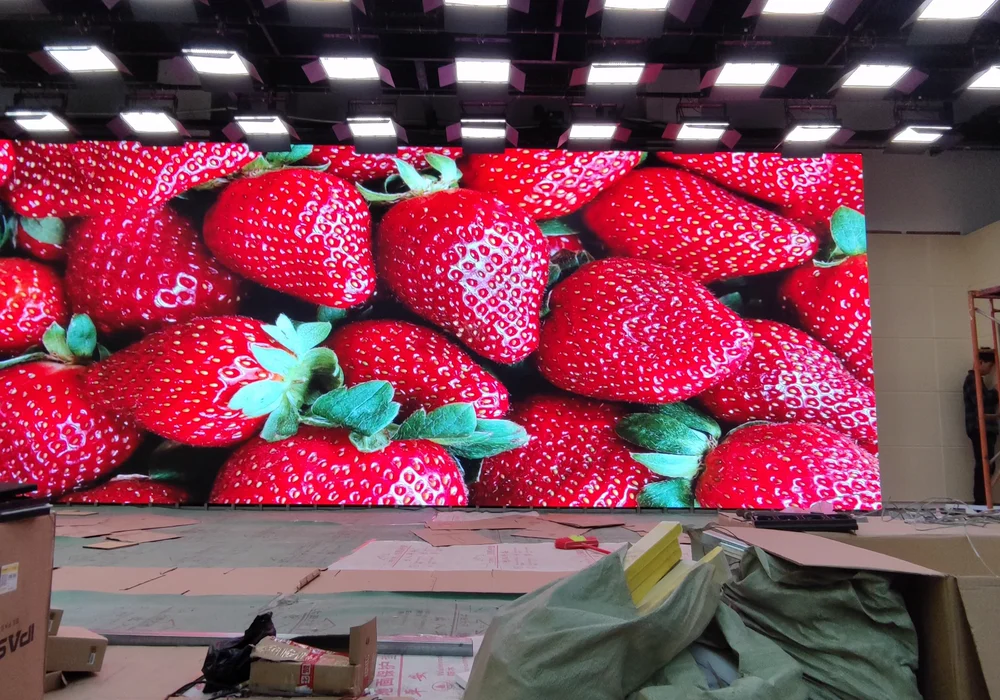
4. Ask suppliers to explain the proposed display configuration
Give bidders the same performance context, then ask them to identify and explain their proposed configuration. The response should connect the display choice to the audience, content, available area, service access, and system workflow instead of presenting an isolated model number.
If you are still building a shortlist, the indoor LED display overview provides category context. The RFQ itself should remain project-specific. For a fine-pitch LED display, include representative fine text and data layouts so the review is tied to real content.
| RFQ section | Buyer should provide | Supplier should return |
|---|---|---|
| Display area | Measured opening, desired image area, drawings, and finish interfaces | Proposed active area, overall arrangement, and dimensional assumptions |
| Audience | Nearest, typical, farthest, and side viewing positions | Reasoning that connects the proposal to the stated viewing conditions |
| Content | Representative files, source formats, and important text sizes | Proposed canvas and source-handling approach |
| Access | Wall section, delivery route, and working-space limits | Service method, access needs, and installation assumptions |
| System scope | Sources, control location, interfaces, and buyer-supplied systems | Included components, required interfaces, and exclusions |
| Project delivery | Milestones, site constraints, and responsibility matrix | Project-dependent schedule, prerequisites, and document list |
5. Define service access and surrounding construction
State whether front access, rear access, or another service arrangement is expected. If the requirement is not yet decided, show the available space and ask the supplier to propose a method. The final decision must work with the finished wall, furniture, stage, counters, and circulation areas.
Ask bidders to describe the service sequence and any clearance or removable-finish requirements. For rear access, identify the entry route and items that may obstruct movement. For front access, identify room elements that could block working space.
Assign responsibility for the support structure, architectural finish, dimensional verification, tolerance coordination, and approval of site changes. Do not assume that the visible wall surface is the load-supporting surface. Structural evaluation and local installation responsibilities should be explicitly assigned to the appropriate project parties.
6. Define power, signal, control, and third-party interfaces
Show the planned power and signal locations on the drawings. Identify who designs and installs electrical distribution, pathways, cables, grounding coordination, network connections, and final terminations. Ask the supplier to list the information that must be confirmed for its proposed configuration.
Map each content source to the control position and display. Note third-party presentation, camera, audio, IT, control, or building systems that must exchange content or commands. Identify the party responsible for testing each interface.
System-scope questions
- Which display, control, distribution, mounting, cable, and accessory items are included?
- Which devices or services must the buyer or another contractor supply?
- Where will control and related equipment be located?
- Which pathways, connection points, and network resources are assumed?
- Who completes configuration, source testing, and final integration?
- Which drawings and interface details are required before production or installation?
7. Make the scope and responsibility matrix explicit
Ask every bidder to complete the same responsibility matrix. Include display supply, support structure, electrical work, signal pathways, installation labor, system configuration, surrounding finishes, content preparation, testing, training, packing disposal, and handover documents.
Use three clear labels: supplier, buyer, or third party. Add an owner and due date for each unresolved input. A quotation is not comparable when one supplier includes installation and system configuration while another assumes that both will be provided locally.
Request a list of prerequisites for delivery and installation. These may include approved drawings, completed structure, available power and pathways, protected staging space, site access, representative source equipment, and named acceptance participants. The response should state which prerequisites are project-dependent.
8. Request an auditable quality and document package
Shenzhen MVPLED Technology Co., Ltd. develops and manufactures LED display systems in Shenzhen, China. Approved manufacturing evidence covers SMT, module production and aging, cabinet assembly, system configuration, inspection, warehousing, and packing. Buyers can use the published MVP LED quality-control process as a reference when defining review questions.
Ask the supplier to describe the project records it will provide and how those records correspond to the approved configuration. Useful requests can include drawing revisions, configuration references, inspection records, packing identification, shipment documents, and installation or handover information, as applicable to the quoted scope.
Do not request broad certification or performance statements without identifying the exact project requirement and market. If a compliance document is necessary, name the requirement and ask the bidder to state the specific coverage it can document for the proposed supply.
9. Ask for clear commercial terms and project variables
Require an itemized commercial response. Separate the display system, control and related equipment, structure or mounting items, accessories, services, packing, logistics, and optional items. Ask the supplier to identify taxes, duties, local work, travel, or third-party costs that are excluded.
MOQ, lead time, production capacity, spare parts, and project configuration vary by product and project requirements. Ask each bidder to confirm these variables for this RFQ instead of relying on a general statement. Provide the intended schedule, destination, delivery terms requested for quotation, and any site blackout periods.
MVP LED’s standard warranty baseline is two years; final coverage is defined by the signed quotation and contract. The RFQ should ask for the proposed warranty scope, start point, exclusions, claim process, and responsibilities, then carry the agreed terms into the signed commercial documents.
10. Define acceptance and handover before comparing prices
Describe who will review the proposed configuration, drawings, delivered items, system operation, and handover documents. Identify representative content and source devices for the review. State how open items will be recorded and closed.
Ask what information will be available before shipment, during installation, and at final handover. Identify the people who need operational guidance and the language or format required for project documents. Acceptance should reflect the signed project scope rather than a new requirement introduced after delivery.
Indoor LED display RFQ checklist
- Write the venue, application, schedule, contacts, and response instructions.
- Attach audience positions, representative content, and the operating workflow.
- Provide measured elevations, sections, floor plans, photographs, and access-route details.
- Ask for the proposed display arrangement and the reasoning behind it.
- Define service access, support, finishes, and working-space constraints.
- Map power, signal, control, network, and third-party interfaces.
- Issue a common scope and responsibility matrix to every bidder.
- Request relevant quality-review records and project documents.
- Require itemized pricing, assumptions, exclusions, options, and project variables.
- Define review, acceptance, training, and handover responsibilities.
When quotations arrive, normalize them against this checklist. Record missing answers and commercial differences before scoring price. The lowest total may represent a smaller scope, a different responsibility split, or unresolved site assumptions.
Frequently Asked Questions
How much detail should an indoor LED display RFQ contain?
Include enough detail for suppliers to respond to the same application, site, scope, and commercial conditions. If information is not yet available, label it as open and ask the bidder to state its assumption rather than leaving the topic invisible.
Should buyers specify a pixel pitch in the RFQ?
You may state a preferred value or ask for an evaluated proposal, but also provide viewing positions and representative content. The supplier’s response should explain how its proposed configuration relates to those project inputs.
What makes two LED quotations comparable?
They become more comparable when they answer the same responsibility matrix and separate included equipment, services, buyer-supplied work, options, assumptions, exclusions, commercial terms, and project-dependent variables.
What information should be confirmed in the contract?
Confirm the approved configuration, scope, responsibilities, drawings, schedule, commercial terms, delivery requirements, acceptance process, warranty coverage, and any project-specific commitments in the signed quotation and contract.
Send a quote-ready project brief
A disciplined RFQ shortens the list of hidden assumptions and makes technical and commercial review more useful. Gather the drawings, audience positions, content samples, service plan, system interfaces, responsibility matrix, destination, and schedule before requesting the final proposal.
For a project-specific review, send your RFQ to MVP LED. Include the measured display area, room drawings, site photographs, representative content, access information, requested scope, destination, and target schedule.
Article Review and Sources
Author: MVP LED Editorial Team, LED Display Product and Application Content
Reviewed by: TOM, Product Manager
Review date: August 6, 2026
Approved MVP LED sources: Indoor LED Display, Quality Control, and Warranty and Services. Company identity and project-variable records are retained in the editorial source log.