
LED DISPLAY PROJECT GUIDE
Church LED Wall Manufacturer: Factory Supply for Sanctuaries
A church LED wall manufacturer should be evaluated on the display system it can supply, not on a sanctuary picture. Begin with the room layout, seating sightlines, cameras, content sources and installation boundary. Ask the factory to identify its proposed display, control, service method and exclusions; leave building work and production integration with the responsible parties.
A worship venue may want one visual surface for songs, announcements, live camera feeds and presentations. The physical LED screen is only one part of that experience. A screen placed for the front rows may be too low for a rear gallery; a wall chosen for the main congregation may look different on a camera feed. The buyer needs to define which viewing and production tasks matter before comparing cabinets or prices. This guide focuses on selecting a manufacturing partner for a permanent sanctuary display, not on claiming that a particular church has used MVP LED equipment.
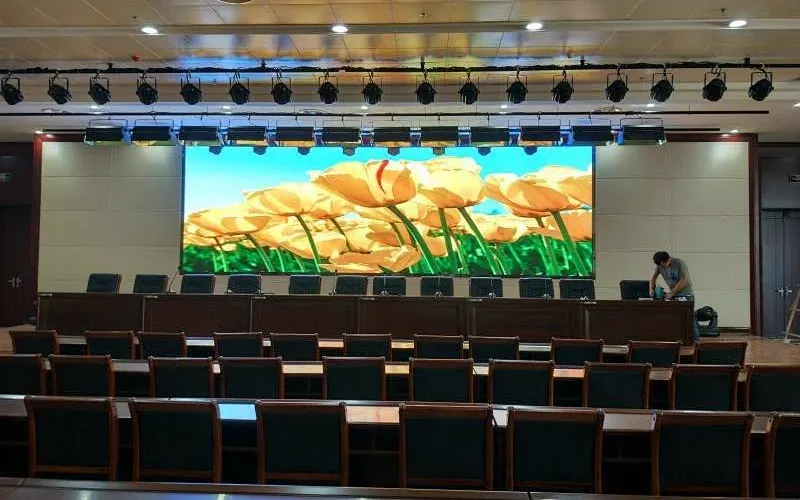
What can a church LED wall manufacturer actually supply?
A church LED wall manufacturer can supply a project-specific physical LED display system and the components identified in its written proposal. For MVP LED, verified company evidence supports development and manufacturing of LED display systems in Shenzhen, China, with documented SMT, module production and aging, cabinet assembly, system configuration, inspection, warehousing and packing. That is a manufacturing claim, not a promise to design a church’s complete AV system. A useful proposal should name the screen configuration, active dimensions, controller or processing items, mounting and service assumptions, accessories, packing and delivery basis. The sanctuary team should separately identify who owns structural review, electrical distribution, camera and audio integration, media production, installation and local approvals. Ask each bidder to respond to the same room drawing and content brief. A supplier photograph or a generic “church package” does not establish that the actual room geometry, viewing positions or operating workflow have been checked.
The MVP LED indoor-display portfolio is the closest product-family starting point for a fixed sanctuary wall. Its broad page describes viewing distance, mounting depth and service access, but a sanctuary quote still needs a selected configuration. The products overview names church displays as an application, while the system scope remains project-specific. Do not turn an application label into an unsupported claim about a completed project, certification or standard church size.
How do seating and camera positions change the screen brief?
Draw the room from the congregation’s perspective. Mark the nearest regular seats, the farthest seats that must read text, any side sections and raised galleries. Note architectural elements that obstruct the view: columns, balcony fronts, lighting bars or other stage equipment. A proposed wall should be assessed from those real positions using representative text and visual content. “Visible from the back” is not enough if the actual message cannot be read or if a stage element blocks part of the image.
Then map the production positions. If the venue uses cameras for recording or streaming, show the cameras’ locations and the LED wall’s place in each shot. A display that looks good to the audience may need different content treatment in a tight camera frame. The church’s AV integrator should test camera exposure and image behavior using the proposed equipment and production settings. Avoid making a universal claim that one pixel pitch or refresh value solves every room. The correct comparison needs a known screen configuration, camera workflow and content sample.
Also identify the operators. Will a volunteer run presentation software from a booth? Will a production crew mix live sources? Is the wall expected to carry one canvas or several zones? These questions affect the control boundary and training needs, which may be outside the display manufacturer’s quote. They do not require the supplier to invent a turnkey service it has not contracted to provide.
Room evidence worth sending to a supplier
- A dimensioned plan and elevation showing the proposed wall position and stage relationship.
- Marked near, middle, far and side seating positions, including any gallery.
- Camera locations and a sample of the content that will appear during a service.
- Existing structure, power, signal path and expected control location.
- Space available behind or in front of the display for safe servicing.
- The responsible AV, electrical, building and installation teams.
These inputs make the factory response more specific. If measurements are provisional, label them as such and request a proposal that records its assumptions. A rendering without a revision-controlled drawing is not a sufficient procurement basis.
Which work belongs to the church AV integrator?
The display supplier and the AV integrator can share an interface without sharing the same contract. The integrator may own cameras, switching, audio, presentation sources, control logic, operator position and commissioning across the room. The building team may own wall structure, power distribution and local installation conditions. The church’s content team may own slides, video, lyrics and update practices. The LED manufacturer should identify the physical inputs and display-control items it proposes; the buyer should identify who connects and tests the complete workflow.
This separation matters especially when the sanctuary changes use across services, rehearsals and events. A wall may show lyrics from one source, camera content from another and announcements from a third. A cabinet quotation does not establish that switching, image mapping or content production is included. Ask for a source and responsibility diagram before finalizing the system. If the church already has a processor or playback system, ask the integrator whether it is compatible with the proposed display; do not assume compatibility from a connector name alone.
| Workstream | Factory proposal should state | Church or partner should confirm |
|---|---|---|
| LED display | Physical format, active area, cabinet layout and service method | Final location and approved mounting interface |
| Control hardware | Included processor, receiving and connection items | Source routing and operator workflow |
| Content | Supported canvas and format assumptions | Media creation, updating and rights |
| Camera production | Display characteristics provided for review | Camera tests and production settings |
| Building work | Display loads and physical interface data as available | Structure, electrical work and local approvals |
The table is a scope conversation, not a statement that every line is included in an MVP LED sale. Each proposal must say exactly what it includes and excludes.
What evidence should be requested before supplier selection?
Ask the manufacturer to return a technical layout tied to the church’s latest drawing. It should identify the display’s active size, proposed format, cabinet or module arrangement, control items, service direction, power and signal assumptions, packing and destination. If the supplier recommends an alternative to the requested layout, it should mark the change clearly. A buyer can then compare the original request and the alternative as separate options.
The supplier should explain how the proposed system will be inspected before shipment and what documents will accompany it. MVP LED’s approved process record covers module aging, cabinet assembly and system configuration as part of its manufacturing work. Do not convert those general process facts into a guarantee about the final installation. Ask for the records applicable to the selected product and for an acceptance plan with the local installer and AV integrator.
Service access deserves an explicit drawing. A wall integrated into finished architecture may not have a usable rear route once the room is complete. A front-service proposal still needs a practical technician position and a way to remove components without damaging stage finishes. The buyer should confirm with the building team which route will remain available after handover. The factory can explain the proposed equipment method, but it cannot approve the church’s building work remotely.
Commercial terms also belong in writing. MOQ, lead time, spare parts and configuration vary by product and project requirements. MVP LED has a two-year standard warranty baseline; exact coverage is defined by the signed quotation and contract. A buyer should review that contract alongside the proposed service route and named support contacts rather than assuming a web-page statement covers every site task.
What should the church send for a display proposal?
Send the sanctuary plan and elevations, proposed wall width and height, seating and camera locations, indoor conditions, current content sources, control position, mounting concept, power and signal paths, installation destination and project schedule. Explain whether the screen is a new installation or a replacement for an existing surface. Name the AV integrator and builder if they have already been appointed. The factory can then propose a physical system without guessing at the rest of the room.
Ask bidders to state inclusions, optional items, exclusions and unresolved information. If one proposal includes a processor while another assumes the church will supply it, put the difference in the comparison sheet. If one supplier quotes only equipment and another includes local installation, do not compare their totals as though they represent the same delivered result. A precise system boundary is more valuable than a broad “complete solution” phrase.
If the existing room is still being designed, request a provisional technical response first. Once the stage, seating or wall structure changes, send a revised drawing and ask the supplier to update the offer. The buyer should retain the revision date and decision trail so later contractors know which geometry the factory priced.
Frequently Asked Questions
Is a church LED wall different from every other indoor LED display?
The hardware may come from the indoor LED display family, but the sanctuary’s seating, cameras, content and installation interfaces create a project-specific brief. Do not assume a single church model or size suits every venue.
Does an LED display manufacturer also supply worship media and cameras?
Not automatically. The written proposal must identify which display and control items are included. The church’s production team or AV integrator normally defines its own content, camera and switching scope.
Can a product photograph prove a supplier completed a church project?
No. Ask for a verified project reference if a past installation is important to procurement. The auditorium image associated with this draft is a product-format reference, not evidence of an MVP LED church contract.
Is a two-year warranty the same as on-site maintenance?
No. The standard warranty baseline and its exact contract coverage should be read separately from installation and site-service responsibilities. Ask how the actual display will be accessed and who performs each task.
Request a sanctuary display proposal
If you are comparing a church LED wall manufacturer, send MVP LED the sanctuary layout and AV brief. Identify the seating and camera positions, wall dimensions and intended content sources. Request a physical-system proposal that makes the factory’s scope, project assumptions and remaining integration work explicit.
Article Review and Sources
Author: MVP LED Editorial Team, LED Display Product and Application Content. Reviewed by: TOM, Product Manager. Review date: November 19, 2026.
Sources: MVP LED indoor LED display; MVP LED products and application overview; MVP LED factory; MVP LED warranty and services. Company and contract-dependent facts are recorded in the project’s approved fact register. The page makes no claim about an MVP LED church customer project.